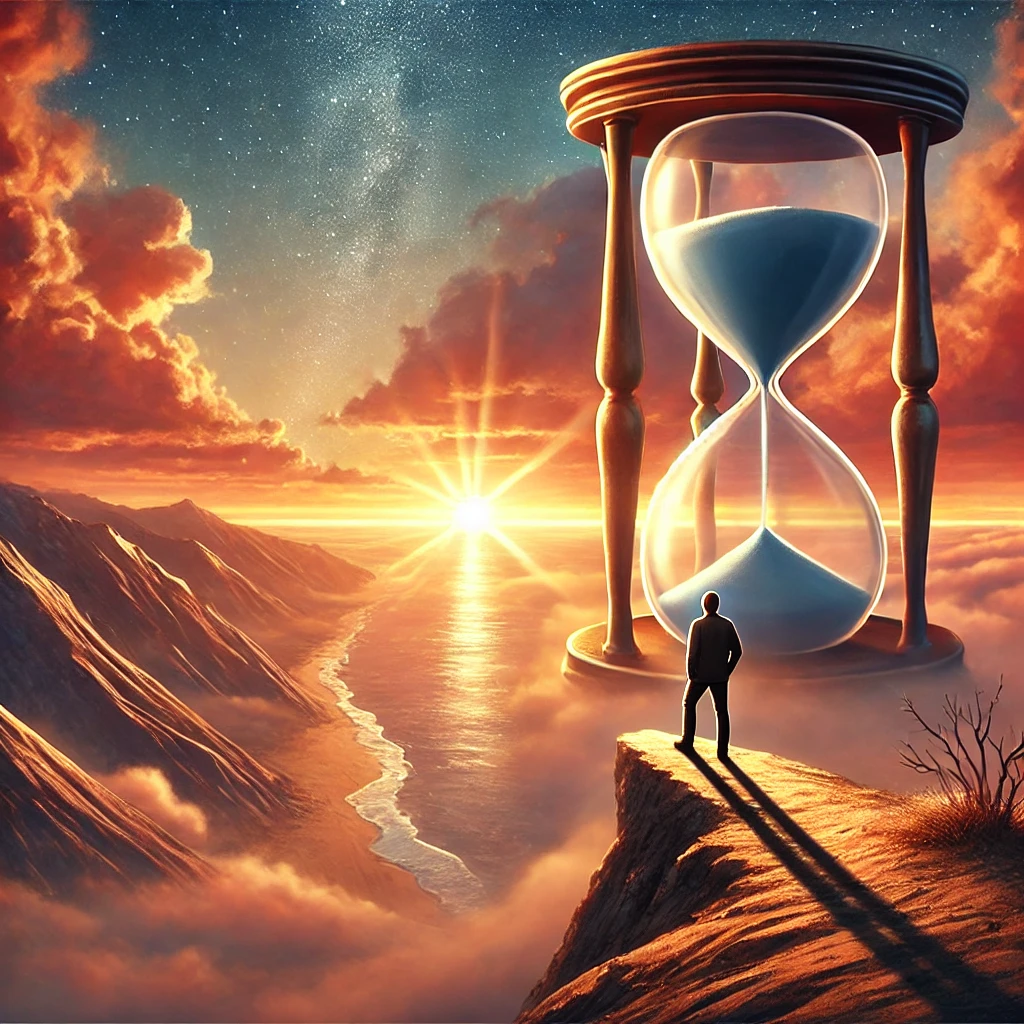
I have been thinking about permanence.
We are always told the same warning.
Whatever you put on the internet is there forever.
It is said like a threat. A moral caution. A digital ghost story.
Post something stupid? It is forever.
Upload a photo? Forever.
Say something reckless in a comment thread? Forever.
But is that actually true?
Or is it something we repeat because it sounds responsible?
Think about it.
Can you remember what you posted three weeks ago?
A year ago?
Five years ago?
Most people cannot.
People care in the moment. A post lives inside a small burst of attention. A few likes, a handful of comments, maybe a flare up of outrage or applause. Then it sinks. The feed moves on. The algorithm shifts. The world scrolls past.
Conversations have lifespans.
Trends decay.
Attention evaporates.
Your online presence becomes less a record and more an impression. A vague idea of who you are. Not your posts, but the pattern of them. Not the details, but the tone.
So what exactly is permanent?
We worry about photos propagating endlessly. We worry about screenshots. We worry about data being stored somewhere, training some unseen AI model. We wonder if deleting something really deletes it. Did you remove it, or did the platform just move it to a server farm in the desert?
We do not know.
And that uncertainty feeds the myth of forever.
But here is the other side no one talks about.
Have you ever searched for something you wanted to find, a blog you loved, a forum thread that helped you once, a website from your early internet days, and it was gone?
You find the link.
You click it.
404.
Domain expired.
Hosting bill unpaid.
Company pivoted.
Owner lost interest.
The modern web quietly eats itself every day.
Entire communities vanish. Millions of conversations dissolve. Decades of human thought disappear because someone stopped paying twelve dollars a month for hosting.
So which is it?
Is the internet forever?
Or is it constantly erasing itself?
Look at GeoCities. Look at MySpace. Whole digital cities once packed with life are now ruins. Webpages, fan sites, journals, amateur manifestos. Gone. The early web was messy and loud and alive. Now much of it exists only in fragments.
And yet there is the Internet Archive.
Type in a dead URL and sometimes it is there. A fossil. A ghost snapshot. Frozen HTML from 2004. Not interactive. Not alive. But preserved.
It feels like stumbling into a digital Pompeii.
And that is when the paradox becomes clear.
The internet is not permanent.
It is not temporary.
It is selectively immortal.
Some things disappear instantly.
Some things linger.
Some things are archived forever.
You do not control which category your content falls into.
The early web was mostly static pages. Easy to capture. Easy to preserve. The modern web is dynamic, personalized, and locked behind logins and databases. Comments sit inside private systems. Messages live inside closed platforms. Entire conversations exist behind authentication walls.
Ironically, the internet is becoming harder to archive at the exact moment we fear it will never forget.
We also live in a new layer of distortion.
Deepfakes.
AI generated faces.
Synthetic voices.
Edited clips.
Compressed pixels on tiny screens.
There was a time when you could trust that what you saw in a video happened. That what you saw in a photograph existed. That the record reflected reality.
Now everything is suspect.
We no longer fear permanence alone.
We fear manipulation.
We fear fabrication.
We fear being replicated.
Facial recognition. Data scraping. Training sets. Pattern prediction. Digital doubles.
Your online presence is no longer just what you posted. It is what can be inferred from it. Modeled from it. Synthesized from it.
We used to leave behind letters.
Books.
Buildings.
Now we leave behind cached fragments.
Archived snapshots.
Server backups.
Training data.
Humanity is building the first planet scale fossil record of everyday life.
Not just kings and generals.
Everyone.
Billions of tiny digital footprints.
Most will be forgotten.
Some will resurface decades later.
Some will exist only as statistical weight inside an AI model.
And beneath all of this, beneath the warnings and the fear, there is a quieter question.
When we ask, “Is the internet forever?” we are really asking:
What part of me survives?
Not physically.
Digitally.
Will I dissolve into the scroll?
Or will some fragment remain?
The answer is uncomfortable.
Some version of you will persist. Not whole. Not conscious. Not coherent.
But as echoes.
A comment here.
A cached page there.
A training weight adjustment somewhere inside a machine.
You will not live forever online.
But you will not vanish completely either.
The internet is neither heaven nor oblivion.
It is a shifting archive of ghosts.
And we are all slowly becoming one.