Sixty-seven percent of employees feel actively disengaged at work, according to Gallup’s latest research (Gallup, 2023). While leaders often blame strategy or skill gaps, behavioral science reveals a different culprit: organizations systematically condition the very behaviors they claim to oppose.
The problem isn’t laziness or incompetence. It’s conditioning. Every interaction, meeting, and email trains employees how to behave—often in ways leaders never intended. Classical and operant conditioning are not relics of Psych 101 but a powerful behavioral ecosystem shaping daily organizational life (Kaggallu, LinkedIn, 2025) [1].
And here’s the critical insight most leaders miss: the conditioning principles that drive behavior are universal, but the workplace structures governing salaried versus union and hourly employees require dramatically different applications.
The Invisible Emotional Wiring of Your Workplace
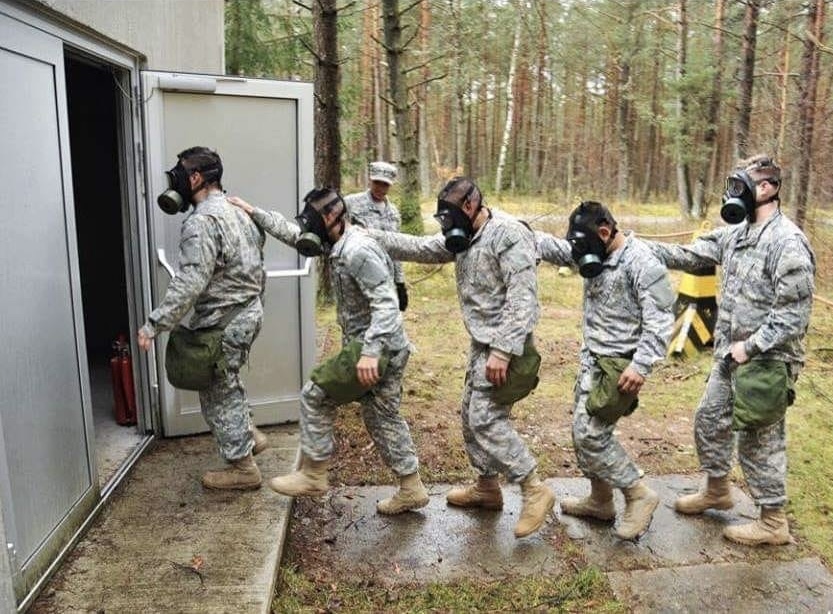
Classical conditioning creates automatic emotional responses to workplace cues. Over time, neutral triggers become loaded with anxiety, dread, or defensive posturing.
The meeting that triggers panic.
When calendar invites consistently signal criticism or bad news, employees develop conditioned stress responses. The notification sound itself becomes a threat, activating the same neural pathways as actual danger. Research on associative learning shows these patterns embed deeply in cognition, creating reflexive anxiety that persists even when meetings become constructive (Kaggallu, 2025) [1].
Feedback as punishment.
If performance conversations consistently feel hostile or punitive, employees condition “feedback” to mean humiliation. They avoid these discussions, deflect criticism, or disengage entirely—not because they don’t want to improve, but because their nervous system has learned to treat developmental conversations as threats. Studies show this reduces constructive dialogue and increases employee withdrawal (eCampusOntario, 2022) [2].
The email that never stops.
Urgent messages sent at 11 PM teach employees that work demands are unpredictable and inescapable. This creates conditioned hypervigilance: constant phone-checking, persistent low-grade stress, and the erosion of boundaries between work and recovery time.Sixty-seven percent of employees feel actively disengaged at work, according to Gallup’s latest research (Gallup, 2023). While leaders often blame strategy or skill gaps, behavioral science reveals a different culprit: organizations systematically condition the very behaviors they claim to oppose.
The problem isn’t laziness or incompetence. It’s conditioning. Every interaction, meeting, and email trains employees how to behave—often in ways leaders never intended. Classical and operant conditioning are not relics of Psych 101 but a powerful behavioral ecosystem shaping daily organizational life (Kaggallu, LinkedIn, 2025) [1].
And here’s the critical insight most leaders miss: the conditioning principles that drive behavior are universal, but the workplace structures governing salaried versus union and hourly employees require dramatically different applications.
The Invisible Emotional Wiring of Your Workplace
Classical conditioning creates automatic emotional responses to workplace cues. Over time, neutral triggers become loaded with anxiety, dread, or defensive posturing.
What Gets Rewarded Gets Repeated (And What Doesn’t, Disappears)
Operant conditioning shapes behavior through consequences. When leaders misapply it—or ignore it entirely—they teach destructive lessons.
The high performer nobody notices.
Research consistently demonstrates that ignoring excellence extinguishes it (Academia.edu, 2015) [3]. When employees invest extra effort and receive no recognition, they learn that discretionary effort is pointless. Innovation slows. Initiative disappears. The organization loses its best performers, who leave for employers who recognize what they contribute.
The squeaky wheel gets the grease.
Dysfunction often gets rewarded by accident. The chronic complainer receives attention and administrative time. The employee who claims overwhelm gets workload relief. The team that misses deadlines gets additional resources. Meanwhile, high-performing teams who meet expectations receive nothing. Behaviors like chronic complaining or shirking work get unintentionally rewarded through attention or workload relief, proliferating dysfunctional norms (HR Daily Advisor, 2019) [9]. The lesson: underperformance pays.
Punishment that backfires.
Inconsistent or disproportionate consequences create learned helplessness and risk aversion. When employees see honesty punished, mistakes hidden, and initiative met with criticism, they learn to stay silent, avoid decisions, and do the minimum required to survive (ScienceDirect, 1992) [4].
The Structural Divide: Why Salaried and Hourly Employees Require Different Conditioning Approaches
Here’s where most organizations fail spectacularly: they apply identical management approaches to employee groups operating under fundamentally different psychological and structural realities.
1. Salaried Employees: The Ambiguity Advantage and the Burnout Trap
The Conditioning Environment:
Salaried workers operate in a world of fluid boundaries, intrinsic motivation levers, and relationship-based consequences. Their compensation is fixed regardless of hours worked, creating both opportunity and risk.
What Works:
Effective conditioning for salaried employees leverages autonomy, mastery, and purpose.
• Recognition that acknowledges impact, not just effort. “Your analysis changed our Q4 strategy” beats “Thanks for working late” every time.
• Flexible reinforcement schedules. Variable rewards (unexpected bonuses, public recognition, development opportunities) create stronger engagement than predictable annual reviews.
• Psychological ownership. When salaried employees feel genuine agency over outcomes, they self-reinforce productive behaviors without constant management intervention.
Where it Goes Wrong:
The dark side of salaried work emerges when organizations exploit ambiguity:
• Scope creep as punishment. High performers get more work, not more recognition—conditioning them to hide capacity and avoid visibility.
• Always-on expectations. When after-hours emails become normalized, you condition chronic stress and condition employees to resent their jobs, not excel at them.
• Dangling the carrot. Always promising rewards but never delivering them.
2. Union and Hourly Employees: The Clarity Imperative and the Fairness Protocol
The Conditioning Environment:
Union and hourly workers operate within explicitly defined boundaries: documented work rules, negotiated contracts, grievance procedures, and time-tracked compensation. This structure fundamentally changes how conditioning operates.
What Works:
Effective conditioning for union and hourly employees requires precision, consistency, and transparency.
• Immediate, specific reinforcement. “Great catch on that safety issue this morning” works. Generic monthly praise doesn’t. The tighter the time link between behavior and consequence, the stronger the conditioning.
• Scrupulous fairness. Union environments amplify the impact of inconsistent consequences. When one employee gets written up for tardiness while another doesn’t, you condition grievances, not improvement. Predictability isn’t optional—it’s the foundation of all other conditioning.
Where it Goes Wrong:
The fastest way to destroy engagement in union environments is through Inconsistency. If you ignore the contract for one person but enforce it for another, you condition distrust. If you only use the contract to punish, you condition an adversarial relationship.
The Psychological Contract vs. The Written Contract: Mastering the “Give and Take”
While union contracts provide the legal floor, the Psychological Contract determines the performance ceiling. This is where the “Grey Zone” of high-performance management exists.
Many managers fear that allowing flexibility—like swapping shifts informally or adjusting breaks for personal needs—undermines the union contract. However, behavioral science suggests the opposite: rigid adherence to the letter of the law often kills the spirit of cooperation needed for mission-critical success.
The “Bank Account” of Trust (Social Exchange Theory)
Psychologically, every relationship functions like a bank account based on the Norm of Reciprocity.
• Deposits: When a manager grants a request that isn’t contractually required (e.g., letting an employee leave 15 minutes early for a child’s game or looking the other way on a minor uniform infraction during a heatwave).
• Withdrawals: When a manager asks for help that isn’t contractually required (e.g., “I know it’s your lunch time, but the line is down. Can you push break back 30 minutes so we can hit this deadline?”)
Why “By the Book” Fails
If a manager runs the department strictly “by the book,” they never make deposits. When a mission-critical crisis hits and they ask an employee to move their lunch, the employee has no psychological motivation to say yes. They will retreat to the safety of the contract: “Sorry, the contract says my break is at 12:00.”
Why Flexibility Wins
When a manager creates a culture of reciprocal flexibility, the employee views the request to move their lunch not as a violation of their rights, but as a reasonable “withdrawal” from a bank account that is currently in the black. They do it because they know that next Tuesday, when they need a favor, the manager will reciprocate.
The Takeaway: You cannot withdraw flexibility from your employees (asking them to bend rules for the company) if you have never deposited flexibility into their accounts (bending rules for their lives).
The Unifying Principle: Intentional Conditioning Respects Structure
Whether you’re managing software engineers or assembly line workers, the principle remains constant: behavior follows consequences, and consequences must fit the structural reality employees operate within.
For salaried employees, that means respecting autonomy while preventing exploitation. For union and hourly employees, that means scrupulous consistency while creating positive reinforcement opportunities within negotiated frameworks.
The mistake isn’t having different approaches—it’s having no conscious approach at all.
Your Next Step: The Conditioning Audit
Audit your organization’s conditioning patterns using this structural framework:
| Employee Type | Key Questions to Ask |
| Salaried | • Are we conditioning sustainable excellence or glorified burnout? • Do high performers get more opportunity, or just more work? • Have we made after-hours responsiveness a proxy for commitment? |
| Hourly/Union | • Are consequences truly consistent, or do we play favorites? • Do we reinforce positive behaviors, or only punish negative ones? • Are we treating the contract as a constraint or a clarity framework? |
| Reciprocity Check | • Are our “Bank Accounts” full? Have we shown enough flexibility to employees’ personal needs to ask for flexibility on mission-critical tasks in return? |
Leadership success begins with conscious conditioning. The question isn’t whether you’re shaping behavior—you already are. The question is whether you’re doing it intentionally, fairly, and with awareness of how employment structure shapes what works.
Sources
• [1] Classical Conditioning in the Workplace: The Invisible Force… (Kaggallu, LinkedIn, 2025)
• [2] 5.2 Classical Conditioning – eCampusOntario Pressbooks
• [3] Conditioning in Organizations – Academia.edu (2015)
• [4] Classical conditioning is more effective when prior knowledge… (ScienceDirect, 1992)
• [9] Behavioral Psychology Principles that Impact Workplace Behavior – HR Daily Advisor (2019)