Category: Life

  • Permanence: The Internet Is Neither Forever Nor Forgotten

    Permanence: The Internet Is Neither Forever Nor Forgotten

    I have been thinking about permanence.

    We are always told the same warning.
    Whatever you put on the internet is there forever.

    It is said like a threat. A moral caution. A digital ghost story.

    Post something stupid? It is forever.
    Upload a photo? Forever.
    Say something reckless in a comment thread? Forever.

    But is that actually true?

    Or is it something we repeat because it sounds responsible?

    Think about it.

    Can you remember what you posted three weeks ago?
    A year ago?
    Five years ago?

    Most people cannot.

    People care in the moment. A post lives inside a small burst of attention. A few likes, a handful of comments, maybe a flare up of outrage or applause. Then it sinks. The feed moves on. The algorithm shifts. The world scrolls past.

    Conversations have lifespans.
    Trends decay.
    Attention evaporates.

    Your online presence becomes less a record and more an impression. A vague idea of who you are. Not your posts, but the pattern of them. Not the details, but the tone.

    So what exactly is permanent?

    We worry about photos propagating endlessly. We worry about screenshots. We worry about data being stored somewhere, training some unseen AI model. We wonder if deleting something really deletes it. Did you remove it, or did the platform just move it to a server farm in the desert?

    We do not know.

    And that uncertainty feeds the myth of forever.

    But here is the other side no one talks about.

    Have you ever searched for something you wanted to find, a blog you loved, a forum thread that helped you once, a website from your early internet days, and it was gone?

    You find the link.
    You click it.
    404.

    Domain expired.
    Hosting bill unpaid.
    Company pivoted.
    Owner lost interest.

    The modern web quietly eats itself every day.

    Entire communities vanish. Millions of conversations dissolve. Decades of human thought disappear because someone stopped paying twelve dollars a month for hosting.

    So which is it?

    Is the internet forever?

    Or is it constantly erasing itself?

    Look at GeoCities. Look at MySpace. Whole digital cities once packed with life are now ruins. Webpages, fan sites, journals, amateur manifestos. Gone. The early web was messy and loud and alive. Now much of it exists only in fragments.

    And yet there is the Internet Archive.

    Type in a dead URL and sometimes it is there. A fossil. A ghost snapshot. Frozen HTML from 2004. Not interactive. Not alive. But preserved.

    It feels like stumbling into a digital Pompeii.

    And that is when the paradox becomes clear.

    The internet is not permanent.
    It is not temporary.

    It is selectively immortal.

    Some things disappear instantly.
    Some things linger.
    Some things are archived forever.

    You do not control which category your content falls into.

    The early web was mostly static pages. Easy to capture. Easy to preserve. The modern web is dynamic, personalized, and locked behind logins and databases. Comments sit inside private systems. Messages live inside closed platforms. Entire conversations exist behind authentication walls.

    Ironically, the internet is becoming harder to archive at the exact moment we fear it will never forget.

    We also live in a new layer of distortion.

    Deepfakes.
    AI generated faces.
    Synthetic voices.
    Edited clips.
    Compressed pixels on tiny screens.

    There was a time when you could trust that what you saw in a video happened. That what you saw in a photograph existed. That the record reflected reality.

    Now everything is suspect.

    We no longer fear permanence alone.
    We fear manipulation.
    We fear fabrication.
    We fear being replicated.

    Facial recognition. Data scraping. Training sets. Pattern prediction. Digital doubles.

    Your online presence is no longer just what you posted. It is what can be inferred from it. Modeled from it. Synthesized from it.

    We used to leave behind letters.
    Books.
    Buildings.

    Now we leave behind cached fragments.
    Archived snapshots.
    Server backups.
    Training data.

    Humanity is building the first planet scale fossil record of everyday life.

    Not just kings and generals.
    Everyone.

    Billions of tiny digital footprints.

    Most will be forgotten.
    Some will resurface decades later.
    Some will exist only as statistical weight inside an AI model.

    And beneath all of this, beneath the warnings and the fear, there is a quieter question.

    When we ask, “Is the internet forever?” we are really asking:

    What part of me survives?

    Not physically.
    Digitally.

    Will I dissolve into the scroll?
    Or will some fragment remain?

    The answer is uncomfortable.

    Some version of you will persist. Not whole. Not conscious. Not coherent.

    But as echoes.

    A comment here.
    A cached page there.
    A training weight adjustment somewhere inside a machine.

    You will not live forever online.

    But you will not vanish completely either.

    The internet is neither heaven nor oblivion.

    It is a shifting archive of ghosts.

    And we are all slowly becoming one.

  • The Gamification of Life: Why It Works, Why It Fails, and When It Becomes a Trap

    The Gamification of Life: Why It Works, Why It Fails, and When It Becomes a Trap

    Every morning starts the same way for me.

    Coffee. Quiet. A few New York Times games. Wordle. A couple of puzzles. No urgency — just the slow warming-up of the brain.

    And somewhere between guessing five-letter words and chasing small wins, I realized something uncomfortable:

    My brain wanted the next reward.

    Not in a dramatic way. Not an addiction. Just a subtle pull — one more, try again, almost there. That’s when game theory stopped feeling academic and started feeling personal.


    What We Mean When We Say “Gamification”

    At its simplest, gamification is the use of game-like mechanics — points, streaks, badges, leaderboards — in contexts that aren’t actually games.

    It’s not about turning life into a video game. It’s about turning effort into feedback.

    Humans are wired to like:

    • Clear goals
    • Immediate feedback
    • Visible progress
    • Frequent micro-rewards

    Games are simply very good at delivering those things. One well-known design framework that explains this is the Octalysis Framework, which maps human motivation in gamified systems:


    https://en.wikipedia.org/wiki/Octalysis


    Why Gamification Works So Well

    From a psychological standpoint, gamification aligns with how motivation actually works.

    Small rewards trigger dopamine. Progress signals competence. Completion satisfies closure.

    That’s why systems like the Apple Watch activity rings are so effective. Closing a ring isn’t exercise — it’s a visual promise kept.

    This same mechanism shows up in many places:

    • Language apps like Duolingo using streaks and levels
    • Loyalty programs such as Starbucks Rewards
    • Professional development platforms that break mastery into milestones

    Here’s a breakdown of how Duolingo uses gamification to drive engagement:


    https://strivecloud.io/blog/gamification-examples-boost-user-retention-duolingo


    Gamification Beyond Buying Stuff

    Gamification isn’t limited to consumer behavior.

    It shows up in:

    • Fitness: daily goals, streaks, challenges
    • Education: badges, levels, and short-term milestones
    • Community & self-improvement: structured progress paths

    Organizations like Toastmasters redesigned their educational systems to create more frequent milestones so participants feel consistent progress.


    The Goldilocks Zone: Not Too Easy, Not Too Hard

    Gamification only works in a narrow psychological band:

    • Too easy → rewards feel meaningless
    • Too hard → people disengage
    • Just right → momentum is sustained

    The best systems deliver constant micro-wins while hinting at something larger ahead.


    When Gamification Backfires

    Gamification is not magic.

    When implemented poorly, it can actually reduce motivation.

    In workplace settings, poorly designed gamification systems have led to disengagement and resentment instead of motivation:


    https://www.shrm.org/topics-tools/news/technology/careful-gamification-work-can-go-wrong

    Academic studies show mixed outcomes when gamification is misaligned with real learning goals:


    https://pmc.ncbi.nlm.nih.gov/articles/PMC10135444/

    One key psychological risk is the overjustification effect, where external rewards reduce intrinsic motivation:


    https://en.wikipedia.org/wiki/Overjustification_effect


    Gamification Isn’t Always Good — Nor Always Bad

    Research consistently shows a nuanced reality:

    • Gamification can enhance learning when designed thoughtfully
    • It can reduce intrinsic motivation if rewards replace meaning
    • It can increase stress when tied to pressure or surveillance

    Additional research on the darker side of gamification:


    https://www.researchgate.net/publication/344330163_Uncovering_the_dark_side_of_gamification_at_work_Impacts_on_engagement_and_well-being


    Using Gamification Without Losing Yourself

    Gamification isn’t the villain.

    Unexamined gamification is.

    Used well, it:

    • Builds momentum
    • Reduces friction
    • Encourages consistency

    Used poorly, it:

    • Replaces reflection with reflex
    • Confuses progress with growth
    • Trains compliance instead of curiosity

    The trick is knowing when to turn the game off.


    Final Thought

    Games are powerful because they mirror life — choices, consequences, uncertainty, reward.

    But life isn’t a game.

    And the moment points matter more than purpose, it’s time to pause and ask:

    Who’s playing whom?

  • If You Had Six Months to Live

    If You Had Six Months to Live

    The other night, my friend and I had a deep conversation about life and how we would live it if we only had six months left. If you knew—without a doubt—that you had just six months to live, how would your life change?

    I believe most of us don’t truly live to the fullest because we assume we have time. We often hear people talk about making the most of life, but do we actually follow our own advice?

    William Shatner has a song called “You’ll Have Time,” which captures this sentiment perfectly. Whether it’s a cover or his original work, the message is clear: famous people, just like everyone else, often think they have time—until they don’t. And one day, you and I will face that same reality.

    We don’t know how or when—maybe a sudden accident, an illness, or something entirely unexpected. We go through life believing there’s always tomorrow, but the truth is, we can never be sure.

    So, if you had only six months left, what would you do?

    • Would you travel the world?

    • Would you spend more time with loved ones, cherishing every moment?

    • Would you finally finish that book you’ve always meant to write?

    • Would you create something meaningful—music, art, a legacy?

    Perhaps you’d continue going to work every day without telling anyone, or maybe you’d quit and chase your passions. Of course, financial constraints play a role in what we can do, but if money weren’t an issue, the only limit would be you.

    Some might hide away under the covers, but I’d bet most would embrace life fully, experiencing everything they could in those six months.

    And that’s the point—we should be living like that all the time. Not just when we’re given an expiration date. Because, in reality, we all have one. We just don’t know when.

    Live like you have six months left. Because one day, you just might.

  • Letting Go

    Letting Go

    Sorry, but you do not have permission to view this content.
  • I will be a free agent

    I will be a free agent

    Ready for new adventures in 2025. I’m here for it! Contact me with your ideas.

  • The meaning of life?

    The meaning of life?

    LIFE IS BULLSHIT

    I know I’m going to regret this post, but after a few weeks I just could not get this out of my head, so here it is. We have NO purpose in the universe. None!

    But that doesn’t mean life doesn’t have meaning. It does. It means exactly the meaning that we choose to give it. You don’t need religion or laws to align your conscious.

    Love, treat others with respect, leave people better than you found them, and live your life with integrity. Because even though nothing matters, the truth is everything matters.

    Judd

    So that seems simplistic I suppose. But I really have spent some time in my head trying to figure this whole thing out. Maybe you believe in God, maybe you don’t. Religion is great for creating the constructs that give life purpose and meaning, because with the belief of a here after, we will focus our energies in hopefully a positive way. That gets pretty weird too depending on your religion and how badly you feel you need to impose your views on others, which isn’t really the point of this post.

    For some reason we want to know what happens to us after we die. It’s like we need some reassurance that life goes on in some other way. Like this can’t be it. We have to have a greater purpose than living and dying. I think that’s the big joke; no one really knows. I mean who made up all these supposed afterlife beliefs anyways? Heaven and hell. Harps and angel wings. And why do we want to believe in some eternal damnation anyways?

    As time goes on in the great universe that we live in, Man has been around here for much less than the blink of an eye. And in this moment of time on this speck of dust in an infinitely expanding universe, in this moment, we believe it all comes down to us. We in the human race are fools. It takes us a lifetime to learn what life is about. We can’t even learn about it from others as much as we try. And that is what makes death so tragic; our individual lives will fade away, and barely put a mark on anything. Friends will forget you and family grieves for a lifetime. And if we are lucky, we had a chance to help make someone else happy in this life, because in the end, luck is having someone special to share a portion of our heart beats and breaths.

    LIFE ISN’T BULLSHIT

    Life is what you make it. We are a lucky chance in this great universe. What we do in the short time we are here is up to us. Be your best, don’t give up, and love with all your passion.

  • Time We Have Wasted on the Way

    When you meet people and consider relationships as you get older you start to realize that relationships are not the same as when you’re 20 years old or even 30 years old later in life you start to think about who you want to spend the rest of your life with and it’s not about raising kids or building home or any of that stuff anymore.

    Life is really about the time and you realize how short that time is because by the time people are around 50 years old, they lived maybe 2/3 of their life. Let’s face it we are not living to 100 years old.

    Most of us will be lucky to live until we’re about 80 to 90 years old at best. You wait until your 65 or 70 to retire only to enjoy what will be 10 to 15 years of your life or do you try to retire as early as possible, age 55-60 and do some things while you’re still physically able and mentally able to remember somethings. Who do you do those things with and who do you wanna spend those moments with?

    I was talking to a friend the other day and we were having that most philosophical conversation about what is life all about, and someone had told them that life was about falling in love and doing good things for other people. My mind went in a different direction, after all we’re just base human beings that are about eating and living and dying. We internally can come up with some amazing idea of what life means to us because we are intelligent beings, but when you take a step back and look, we’re just like any other animal on the planet. We live, breathe, procreate, and die. It’s weird to think of it that way, but it is true.

    People who don’t know you never know how much you love them or how much you meant to somebody else. There are millions of people on this planet billions of people on this planet and not every one of them will touch more than a handful of people in their life. Does making a difference count and how do you make a difference? I don’t know.

    You hope that your efforts will leave a legacy and then other times you think it was just a flash in the pan. Part of our conversation was talking about Maslow’s hierarchy of needs and I said your purpose is at the bottom and my friend said your purpose is at the top. You can’t get to the top unless you have the bottom all worked out, if you’re lucky you get to the top. It depends on where you are in your station of life and where you will be on the hierarchy.

    So many of us are just wasting time, breathing air, eating food, and really not doing anything but using up resources on this planet. Yeah, we enjoy our TV shows and going out and socializing here and there, but is that our purpose in life? Or is our purpose in life to help other people so that they can be more successful in there so that they can move up the pyramid. What are we doing? What are we doing?

  • People in your life

    People in your life

    I spend time thinking about the people who have made an impact in my life. You know, the people that matter. We have a lot of social media out there and it’s easy to scroll past people, see some post and move on. But there are certainly people who are the one’s who make the difference. They have an impact like Thor’s hammer, Mjölnir, so it’s honestly impossible to forget them.

    Losing people in your life

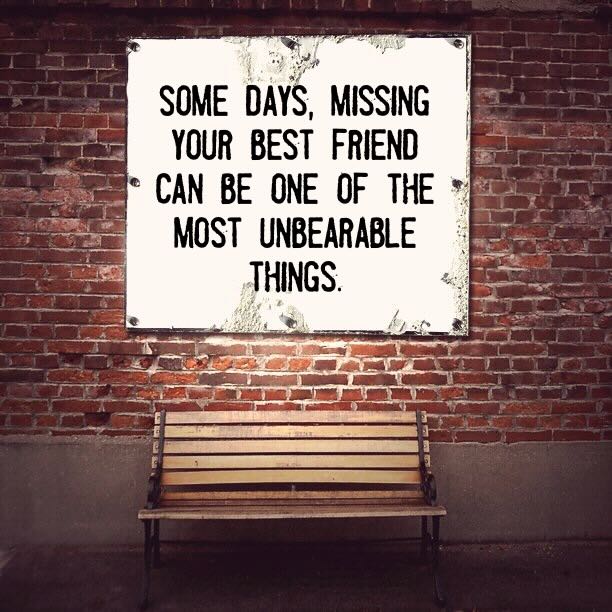
    Probably one of the most difficult things is losing people in your life. That could be by argument or by death. Being separated from people you love is probably the most painful thing ever. Emotional pain is worse than physical pain because there is really no way to mask or remove it. You can take drugs to remove the physical pain and that can help relieve the suffering, but not really so much with the emotional pain.

    You can miss someone so badly that you just don’t know what to do. Losing a child to a drug poisoning can cause serious grief, and no amount of medication can bring that person back. I had a friend who was estranged from her daughter, and she loved her very much. Her daughter refused to speak to her, ever, even to the point where she didn’t even attend her grandmothers funeral. My friend turned to alcohol to numb the pain of that relationship. Eventually at age 50 she succumbed to the effects of alcohol. She died in hospice with a failed liver.

    Sometime there is nothing you can do.

    You can’t save people as I have learned. You can sometimes just try and be a friend, if people will let you. You support your friends in an altruistic way and hope for the best.

    Don’t be resentful. You can spend a life time working trying to be helpful to watch someone walk a different path. We have to be on our own path, and all we can do is bring love. Sadly people will reject love from us, even when we bring our “A” Game.

    Amo, Amas, Amat!

    All I know is that love is something really hard for me to let go of. If I fall in love, maybe I let go, but I’m alway going to love you.

    Romantic? I don’t know, but there have been a lot of movie and references to this movie, this story, that it obviously means something to a lot of people. People can leave your life, then come back in. Rick loves hard, unlike Captain Louis Renault.

    Love is what makes us human. When we stop caring about others, we lose our humanity. Love is what separates us from everything else.

  • Life’s Journey’s

    Where are you going?

    I would have to say, over the course of my life, I’ve taken time out to look around, see where I’m at, where I’ve been, and ponder, where am I going? This time in my life has really given me cause to pause. I’m 52 years old and there are some milestones that I start to think about. Retirement age will come sooner than I would imagine. Early retirement at 55 is possible, and anywhere between 55-60, I could consider doing that.

    Restarts

    Do you ever think about what you would do if you could have a “do-over”. I don’t know if there are so much “do-overs” as I believe in restarts. I think that you can end one career or passion and put yourself into something else. We think about that passion that we have for whatever it is, and wonder, why am I not making money or following my dream doing what makes me happy? We do get stuck doing the job that puts the money in our pocket and enables us to live the life we think we want to live. Pay the bills, enjoy some entertainment, and breathe, so we hope.

    What would you do if you had the support and willingness to try and know you might fail? It’s scary to start something new. As the saying goes, “…but what if you fly?” I think that confidence is great, but knowing that other have confidence in us is a special kind of strength. YES, believe in yourself, and having friends along the way that believe in us is important as well.

    A Goal is a Dream with a Deadline.

    Multiple Sources have been quoted.

    End of Life

    That title sounds a little morbid, but there really is 3 major phases of life for most people:

    • Childhood from 0-(until you leave your parents home) 26.
    • Adulthood (Work life on your own until Retirement) and
    • Retirement (Your “Golden Years”).

    Retirement is End of Life for many people. The idea you stop working and you are done seems to be what a lot of people are living for. Living to die. And some people never stop working and never get to retire. So what do you do so you’re not just moving into an old age home to eat soft food and have your kids or grandkids wait for you to die so they can collect an inheritance.

    You Choose When You Die

    If you aren’t thinking about what you want to do in that last phase of life, and planning for it, you will never get there. You need to try and own your home if possible, get yourself as debt free as possible so you have live on a limited income if you’re not working, if you can. OK, easier said than done.

    Let’s go way beyond that, because once you stop worrying about the basics, then what?

    Will you travel? What hobbies and interests do want to develop or maintain? You look at someone like former President Jimmy Carter, who is still building homes with Habitat for Humanity and have to ask stand back and think how amazing that is. He’s not some administrator, he’s a guy on a job site with a hammer.

    We have to find our passion, our love and keep the people and things in our life that matter to us. The point, as many have said, is to never grow old, and live a life on fire and with passion.