Category: AppleWatch

  • The Gamification of Life: Why It Works, Why It Fails, and When It Becomes a Trap

    The Gamification of Life: Why It Works, Why It Fails, and When It Becomes a Trap

    Every morning starts the same way for me.

    Coffee. Quiet. A few New York Times games. Wordle. A couple of puzzles. No urgency — just the slow warming-up of the brain.

    And somewhere between guessing five-letter words and chasing small wins, I realized something uncomfortable:

    My brain wanted the next reward.

    Not in a dramatic way. Not an addiction. Just a subtle pull — one more, try again, almost there. That’s when game theory stopped feeling academic and started feeling personal.


    What We Mean When We Say “Gamification”

    At its simplest, gamification is the use of game-like mechanics — points, streaks, badges, leaderboards — in contexts that aren’t actually games.

    It’s not about turning life into a video game. It’s about turning effort into feedback.

    Humans are wired to like:

    • Clear goals
    • Immediate feedback
    • Visible progress
    • Frequent micro-rewards

    Games are simply very good at delivering those things. One well-known design framework that explains this is the Octalysis Framework, which maps human motivation in gamified systems:


    https://en.wikipedia.org/wiki/Octalysis


    Why Gamification Works So Well

    From a psychological standpoint, gamification aligns with how motivation actually works.

    Small rewards trigger dopamine. Progress signals competence. Completion satisfies closure.

    That’s why systems like the Apple Watch activity rings are so effective. Closing a ring isn’t exercise — it’s a visual promise kept.

    This same mechanism shows up in many places:

    • Language apps like Duolingo using streaks and levels
    • Loyalty programs such as Starbucks Rewards
    • Professional development platforms that break mastery into milestones

    Here’s a breakdown of how Duolingo uses gamification to drive engagement:


    https://strivecloud.io/blog/gamification-examples-boost-user-retention-duolingo


    Gamification Beyond Buying Stuff

    Gamification isn’t limited to consumer behavior.

    It shows up in:

    • Fitness: daily goals, streaks, challenges
    • Education: badges, levels, and short-term milestones
    • Community & self-improvement: structured progress paths

    Organizations like Toastmasters redesigned their educational systems to create more frequent milestones so participants feel consistent progress.


    The Goldilocks Zone: Not Too Easy, Not Too Hard

    Gamification only works in a narrow psychological band:

    • Too easy → rewards feel meaningless
    • Too hard → people disengage
    • Just right → momentum is sustained

    The best systems deliver constant micro-wins while hinting at something larger ahead.


    When Gamification Backfires

    Gamification is not magic.

    When implemented poorly, it can actually reduce motivation.

    In workplace settings, poorly designed gamification systems have led to disengagement and resentment instead of motivation:


    https://www.shrm.org/topics-tools/news/technology/careful-gamification-work-can-go-wrong

    Academic studies show mixed outcomes when gamification is misaligned with real learning goals:


    https://pmc.ncbi.nlm.nih.gov/articles/PMC10135444/

    One key psychological risk is the overjustification effect, where external rewards reduce intrinsic motivation:


    https://en.wikipedia.org/wiki/Overjustification_effect


    Gamification Isn’t Always Good — Nor Always Bad

    Research consistently shows a nuanced reality:

    • Gamification can enhance learning when designed thoughtfully
    • It can reduce intrinsic motivation if rewards replace meaning
    • It can increase stress when tied to pressure or surveillance

    Additional research on the darker side of gamification:


    https://www.researchgate.net/publication/344330163_Uncovering_the_dark_side_of_gamification_at_work_Impacts_on_engagement_and_well-being


    Using Gamification Without Losing Yourself

    Gamification isn’t the villain.

    Unexamined gamification is.

    Used well, it:

    • Builds momentum
    • Reduces friction
    • Encourages consistency

    Used poorly, it:

    • Replaces reflection with reflex
    • Confuses progress with growth
    • Trains compliance instead of curiosity

    The trick is knowing when to turn the game off.


    Final Thought

    Games are powerful because they mirror life — choices, consequences, uncertainty, reward.

    But life isn’t a game.

    And the moment points matter more than purpose, it’s time to pause and ask:

    Who’s playing whom?
  • Running to Race

    Running to Race

    I consider myself an average runner. I’m not fast, but I’m not slow either. I just get the job done. My average pace for a 10K is usually around a 10-minute mile, depending on where I’m at in my training. Sure, I’ve had faster races and slower ones too, but the most important thing isn’t the race—it’s the training that gets you there.

    I’ve trained in a variety of ways, from running daily to limiting myself to just three runs a week. Here are some thoughts on training and conditioning for races. Of course, your mileage may vary, and I’m not a certified trainer—this is just my personal experience.

    Prioritize Your Health

    First and foremost, your health comes first. Starting a training program recklessly and getting injured won’t do you any good—physically or mentally. Listen to your body and ease into your routine to prevent setbacks.

    Walking is a Great Start

    If you’re new to running, start by simply getting off the couch and walking. Apps like Couch to 5K can help you build up gradually without overwhelming you. There’s no need to sprint out of the gate—progress at your own pace.

    Don’t Underestimate Cross-Training

    Running is an excellent cardio workout, but it’s not the only form of exercise that benefits runners. Strength training, toning, and other forms of cross-training can help you build muscle and improve overall fitness. At 55, I’ve discovered that cross-training has helped me in ways I never expected. It not only strengthens your body but also provides a much-needed break from the repetitive impact of running, helping you recover better.

    Stretch More

    Stretching is critical, even if it’s something many runners (including myself) tend to skip. Programs like Apple Fitness+ offer guided cool-downs that I’ve found invaluable, especially after other workouts like rowing, spin, or strength training.

    Stretching helps loosen tight muscles, improves flexibility, and reduces the risk of injury. After long runs, your muscles need to recover and be re-nourished, so don’t neglect this step. Refueling after a workout is also essential to prepare your body for your next session.

    Find Motivation and Accountability

    Sticking to a routine is hard, especially if you’re not part of a running group or community. A running buddy or even a non-runner accountability partner can make a big difference. Sometimes, all it takes is someone checking in to keep you motivated.

    Racing as a Celebration

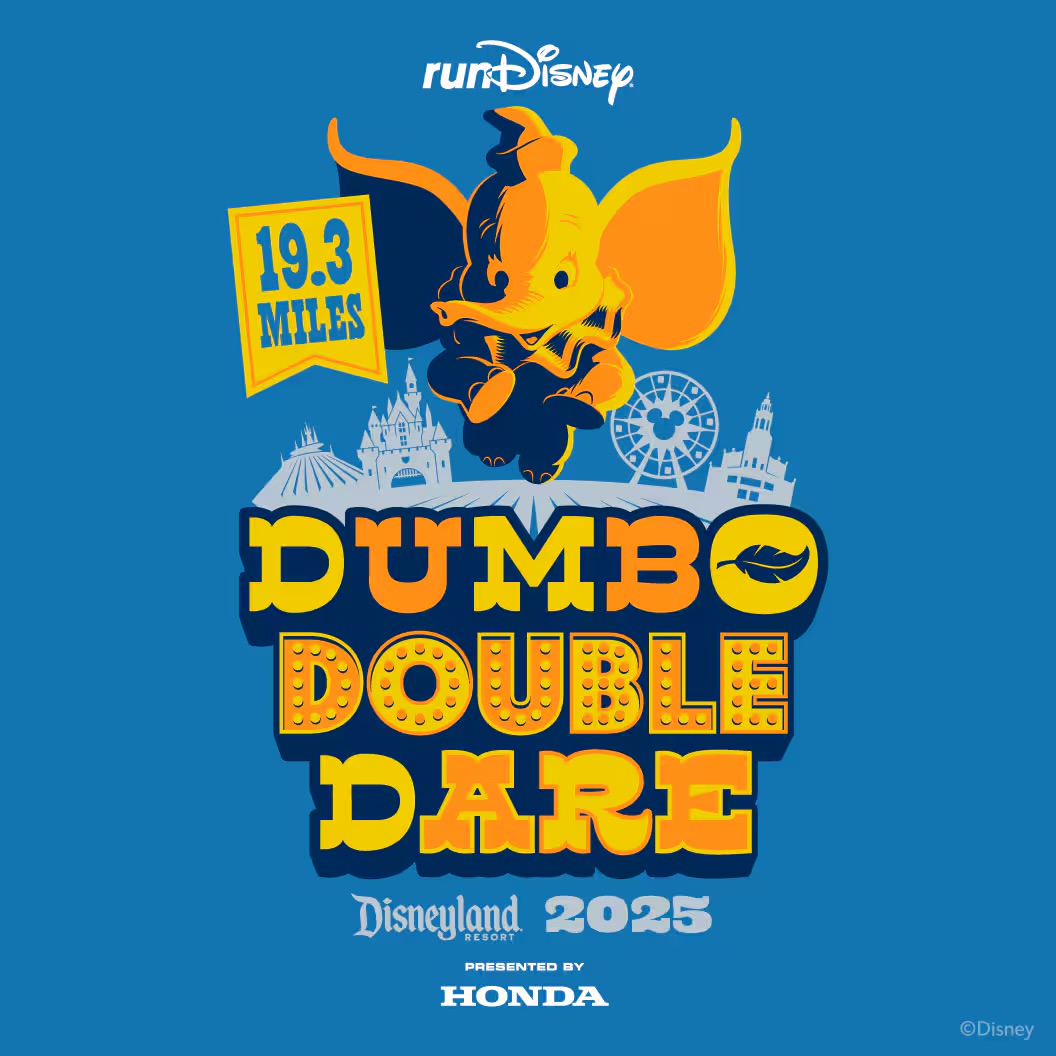
    This week, I’m running two back-to-back races: the Disneyland 10K and half marathon, part of the Dumbo Double Dare series. I’m super excited to run through Disneyland and California Adventure Park—it’s a great way to celebrate all the effort that goes into training.

    As Coach Bennett from the Nike Run Club app says: “We don’t race to prove we are runners. We race to celebrate we are runners.” That mindset perfectly captures why I run races like RunDisney.

    If you haven’t had the chance to participate in a Disney race, consider adding it to your bucket list. Yes, it’s pricey, but the experience is magical. Living in the Orlando area makes it easier for me, but even if you’re far away, it’s worth the trip.

    The Joy of the Running Community

    Beyond Disney races, I’ve done countless others, from short sprints to marathons. Each race presents its own challenges and rewards, from speed workouts to beach runs. The camaraderie among runners is one of the best parts of the sport.

    Runners don’t see each other as competition. We’re a community, supporting one another to do our best. Whether you’re racing against the clock or just enjoying the journey, your fellow runners will cheer you on every step of the way.

    So, lace up your shoes, find your routine, and celebrate what it means to be a runner. Every step you take is a victory—enjoy the journey!

  • Fitness Challenges

    How are you keeping your fitness in check during the home quarantine? Are you getting out for a walk or a run? Are you doing activities with your TV, such as Yoga, Crossfit, or maybe using something like a WiiFit? Whatever you do, I hope that you are motivated to keep moving.

    Social Running in Port Canaveral

    Social Running

    I think that one thing that has motivated me as a runner is social running. Before we were lockdown in our homes, I was out one to two nights a week, running with friends. There are social groups for running. We joke, they are drinking clubs with running problems. Socialized fitness activities can bring a person a lot more than just a good workout. These types of groups create an atmosphere that allows us to develop healthy exercise habits depending on how you leverage it.

    Not Just for the Social

    One thing that I experience in the beginning of being part of a running club was that these folks were actually training. They weren’t just getting out for a quick 5K, drinking a beer and going home. Many of these people are serious about doing more. As you talk to people, they are concerned about their performance, their health, injuries, and they are COMPETITIVE.

    It is pretty typical to hear someone during the cooler race season months to say, what race are you running this weekend? Are you doing that 5K or 1/2 Marathon? What was your time? Did you get a PR (Personal Record)? What do you eat before you run? What kind of shoes do you like? The questions go on and on, and before you know it, you are part of a community.

    Over the last decade, the idea of an individual getting personal electronic metrics has taken off. The first device I had was an iPod with a pedometer in my shoe that counted steps that connected with a system that Apple and Nike developed known as Nike+. I’ve been doing that system for a long time and found that there were a lot of other people using the system as well. It’s come a long way, and is now software based using GPS and gyros built into phones and watches, particularly the Apple Watch.

    This all brings me back to my friends in my running group.

    A Little Friendly Competition

    Since we are all “Social Distancing” or really physical distancing and not meeting up like we used to until this virus threat passes, I decided to employ a feature on the Apple Watch that allows for a 7-Day competition with friends that have Apple Watches.

    You can see this week I have three competitions going with various days left of the competitions. You score up to 600 points per day. Both people can get the 600 points. There are three rings of activities that you try to close and exceed as you can see.

    Move Goal

    You set your move goal, and each person can have their own personal move goal. This determines your active caloric burn beyond your resting calorie burn. So as you are more active throughout your day you can get Move Calories. As of right now I’ve gotten 82% of my goal. When I reach my goal, I will get 100 points. Double that goal and get 200 points.

    Exercise Goal

    Here is where everyone is equalized. 30 minutes is the goal for 100% exercise for the day. That will get you 100 points. You can exercise however works best for you. Do Yoga, Walk, Run, Bike, Swim, Kayak, you name it. Every 30 minutes of exercise will get you 100 points. Exercise for 1 hour, get 200 points and so on. Technically you could max out every day with 600 points on exercise alone, but you will mostly get 200 points just on your Move and Stand Goals. so if you exercise for an 1-1/2 hours a day, you should get close to getting all your points.

    Stand Goal

    The dreaded stand goal. There is this concept of move throughout your day. We tend to do our exercises and then be sedentary throughout the rest of our day. The stand goal gets you up once and hour and moving about. Step away from the computer and get that goal. Get 12 stands (once per hour), and you complete the circle. Also you get 100 points. If you do the math, you can get more than 100 points for stands, maxing out at 200 points for stands if you are up for 24 hours. Not likely for most people, but 18 hours isn’t unreasonable for many.

    Competition Keeps Us Moving

    So it’s this competitive nature that keeps us moving, keeps us stronger and healthier. It keeps us connected to remind us that we’ll all be running again soon, racing, training. No one hates to lose, but it’s all friendly. And that’s the spirit of this type of event. Get out there each day, do your best, and have fun.

    I hope that no matter what people are doing, they are moving around and staying active, even as people feel isolated in their homes. The opportunity to feel more connected is there for those who enjoy that. But no matter what, take some time out of each day to maintain your physical fitness.